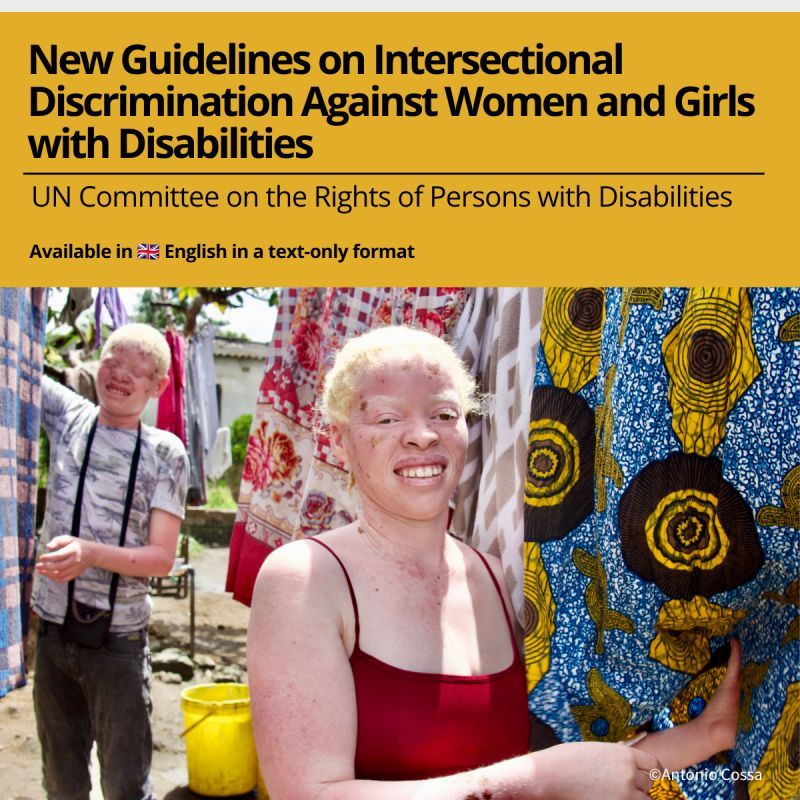
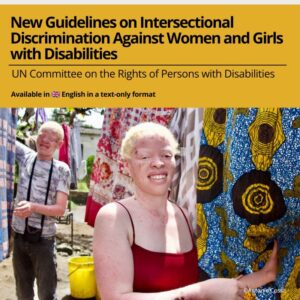
The United Nations Committee on the Rights of Persons with Disabilities has published new Guidelines on identifying and addressing intersectional discrimination against girls, adolescents, women and older women with disabilities. The Guidelines provide an important framework for understanding how different aspects of a person’s identity can intersect to create unique forms of discrimination and barriers to human rights.
The Guidelines recognise that gender, age and disability, alongside factors such as race, ethnicity, socioeconomic status and migration status, can combine to expose women and girls with disabilities to multiple and overlapping forms of discrimination. They address critical areas including violence, access to justice, education, healthcare, employment, and participation in public life.
For Albinism Umbrella, a particularly significant aspect of the Guidelines is their explicit recognition of women and girls with albinism. The document highlights the heightened risks of violence and harmful practices they may experience, as well as the specific barriers they face in accessing healthcare and inclusive education.
This recognition is important because the experiences of women and girls with albinism are often shaped by the intersection of disability, gender-based discrimination, stigma, and harmful misconceptions about albinism. Addressing these challenges requires approaches that recognise their specific circumstances and ensure their rights, safety, dignity, and participation are protected.
The Guidelines strengthen the call for governments, institutions, and development partners to adopt policies, programmes, and protection mechanisms that respond to the lived realities of women and girls with disabilities, including those with albinism. In Uganda and beyond, translating these recommendations into practice will be essential to advancing equality and ensuring that no one is left behind.
Albinism Umbrella congratulates the Africa Albinism Network, Validity Foundation, and all partners whose joint submission contributed to shaping the Guidelines. Their collective advocacy demonstrates the importance of ensuring that the voices and experiences of women and girls with albinism are represented in international human rights frameworks.
While the publication of the Guidelines marks an important milestone, the work does not end here. Governments, civil society organisations, and other stakeholders must work together to translate these standards into meaningful action through inclusive laws, responsive policies, accessible services, and stronger protection against discrimination and violence.
At Albinism Umbrella, we remain committed to advocating for the rights, dignity, and inclusion of persons with albinism, particularly women and girls who face intersecting forms of discrimination.
Read the Guidelines: https://ow.ly/qSOc50ZQUYN
Last modified: October 12, 2026