Proudly in My Skin: International Albinism Awareness Day Celebrations (IAAD) in Kamuli
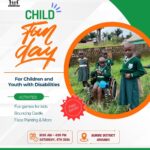
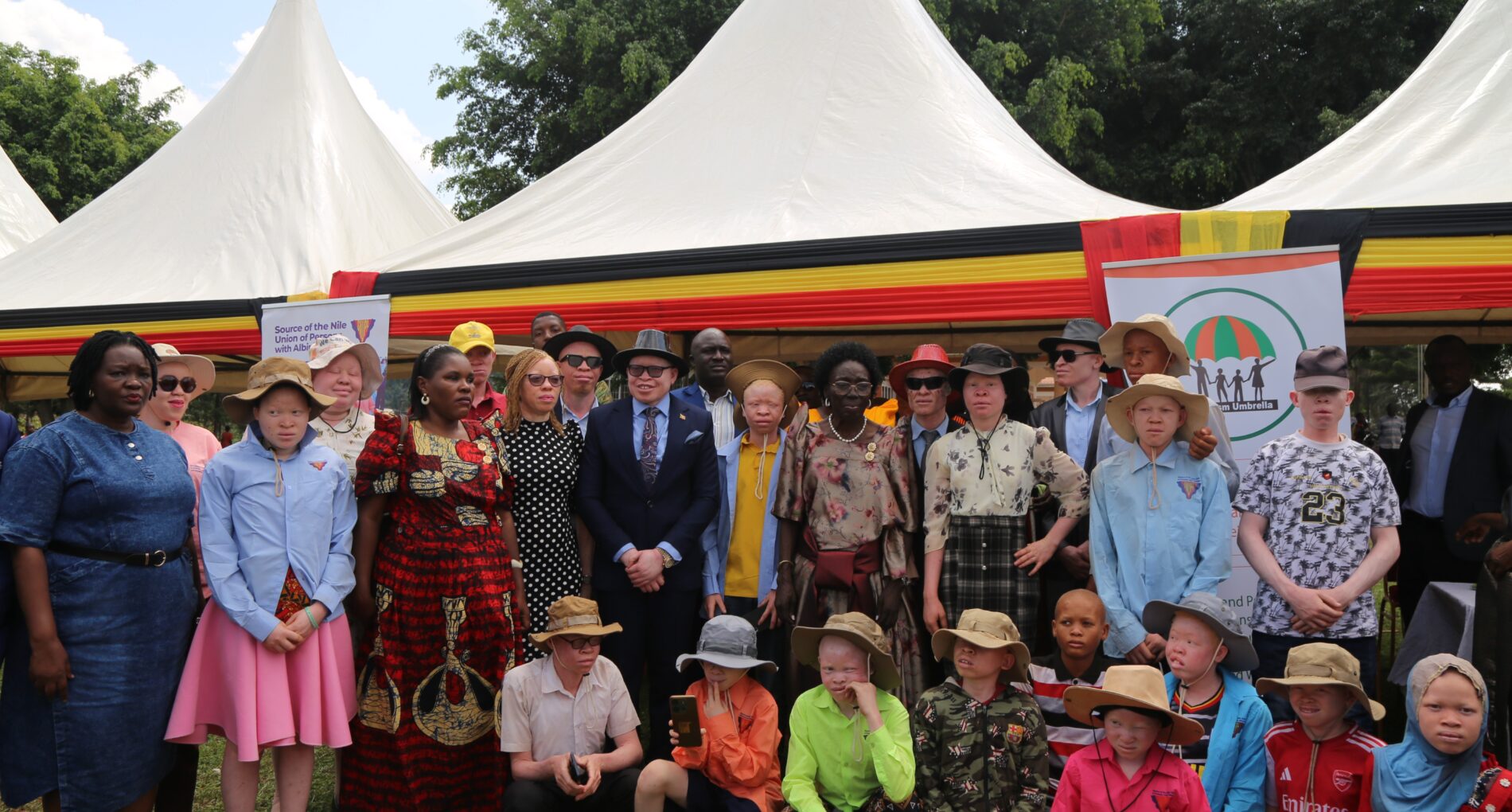
On Saturday, 13 June 2026, Uganda commemorated International Albinism Awareness Day (IAAD) at Boma Grounds in Kamuli District, Eastern Uganda under the global theme, “Proudly in My Skin: Celebrating All Skin Tones.” The national celebration brought together persons with albinism, government leaders, development partners, civil society organisations, students and community members to celebrate diversity while advocating for equal rights, healthcare and inclusion for persons with albinism.
The event focused on some of the most pressing issues affecting the albinism community, including access to sunscreen and dermatology services, the growing burden of skin cancer, discrimination in employment, and the continued threat of ritual-related violence fuelled by harmful myths.
Representing albinism advocacy organisations, Peter Ogik, Executive Director of the Source of the Nile Union of Persons with Albinism (SNUPA) called for sunscreen to be recognised as an essential medicine and made available in health facilities across Uganda. He noted that many people still travel long distances to access sunscreen and highlighted the country’s shortage of dermatologists.
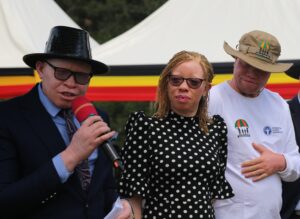
Leaders of Albinism Organisations: (L-R) Peter Ogik (SNUPA), Olive Namutebi (Albinism Umbrella), Okwi Simon Peter (Albinism Umbrella)
“I also urge the government to strengthen protection against ritual-related attacks and appeal to employers to judge persons with albinism by their abilities rather than their appearance,” Ogik added.
Representing a younger demographic of persons with albinism, Frida Biryanyi, a pupil at Wanyange Primary School, reminded the audience through poetry that regardless of skin colour, everyone deserves equal dignity and opportunity. Long-time albinism rights advocate, Olive Namutebi shared her personal journey of growing up with fear and stigma, through what she called, “Letter to My Younger Self.” Her message encouraged young people with albinism to embrace who they are, protect themselves from the sun, and refuse to let discrimination define their future.
Speaking on behalf of the National Union of Disabled Persons of Uganda (NUDIPU), the CEO, Esther Kyozira called for greater investment in skin cancer research, treatment and prevention. She stressed that healthcare should focus not only on preventing skin cancer but also on ensuring those already affected receive timely treatment. She also highlighted how poverty and persistent myths continue to expose persons with albinism to violence and exclusion.
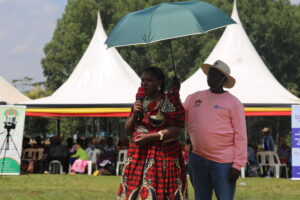
Esther Kyozira of NUDIPU delivering her speech
In attendance were some development partners. “We are committed to supporting inclusion and call on government, schools, communities and civil society to work together to ensure persons with albinism can live free from fear and access quality healthcare and education,” Sandra Sizu, representing the Norwegian Association of the Disabled reaffirmed.
The Kamuli District LCV Chairperson pledged to promote inclusive recruitment within the district and committed to continued engagement with advocates for persons with albinism. A representative from the Ministry of Gender, Labour and Social Development highlighted ongoing government efforts to include persons with albinism in national programmes while advocating for sunscreen in public health services and protective school uniforms for learners with albinism.
Delivering her keynote address as the Guest of Honour, Rt. Hon. Rebecca Alitwala Kadaga, First Deputy Prime Minister and Minister for East African Community Affairs, challenged leaders to translate commitments into action. Emphasising the importance of healthcare, she stated,
“Sunscreen is not a cosmetic; it is medicine.“
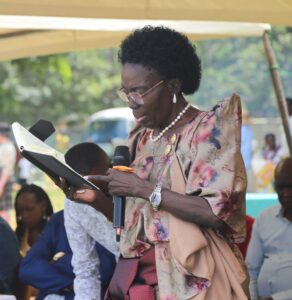
The Guest of Honour, Rt. Hon. Rebecca Alitwala Kadaga, delivering her keynote speech at the IAAD26 celebrations, Kamuli.
She further called for stronger government support, including increased funding, specialised training for health workers, and greater accountability in implementing commitments made to persons with albinism.
As the celebrations concluded, one message echoed throughout Kamuli: true inclusion goes beyond awareness. It requires accessible healthcare, protection from violence, equal opportunities in education and employment, and a society that recognises persons with albinism for their abilities not the colour of their skin.
Last modified: July 1, 2026