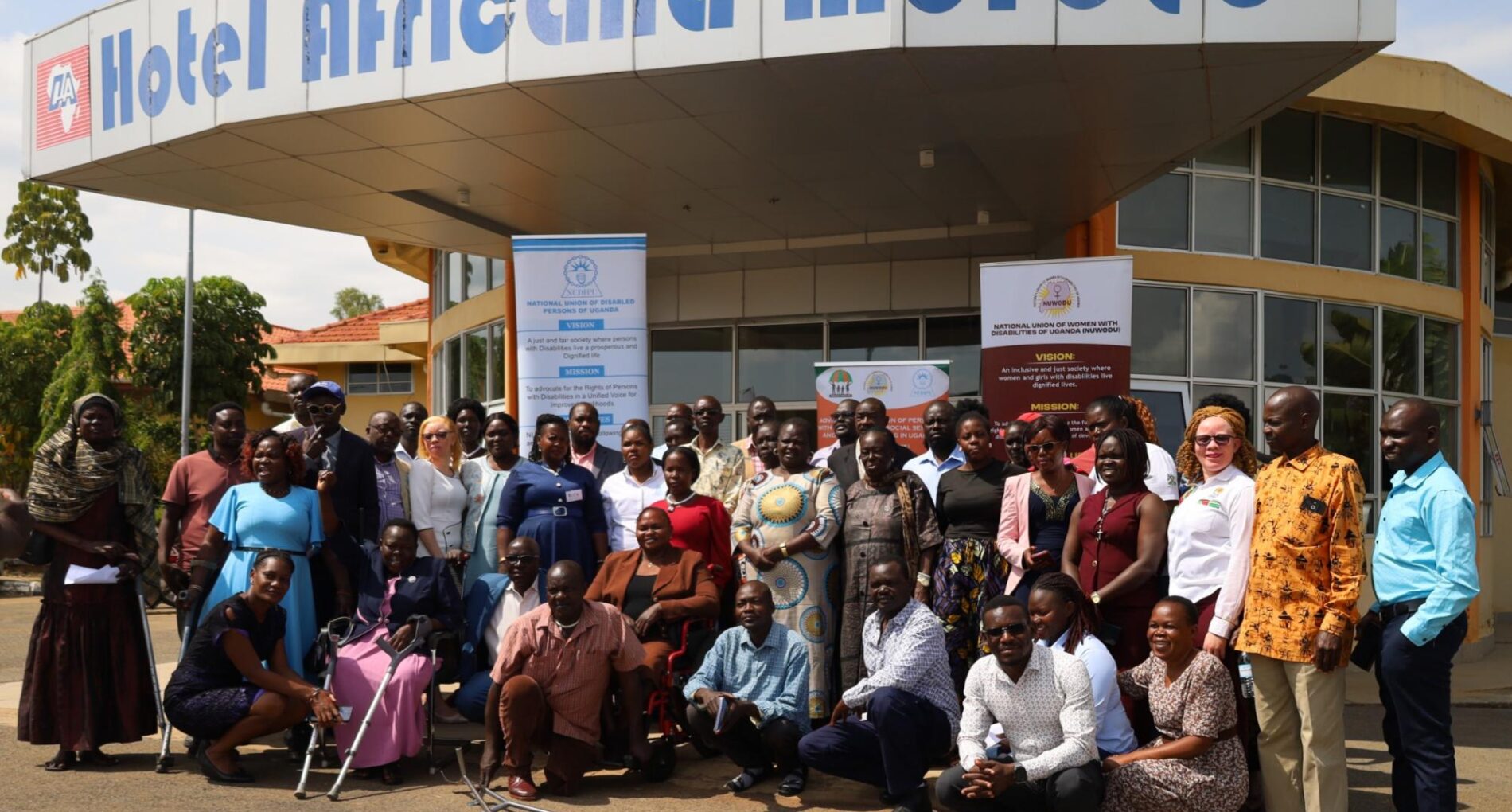
On 9 July 2026, Albinism Umbrella, in partnership with the National Union of Disabled Persons of Uganda (NUDIPU) and National NUWODU, successfully convened the Stakeholders’ Convention on the Status of Disability Inclusion in the Karamoja Region at Hotel Africana, Moroto.
The convention was supported by the Embassy of Denmark in Uganda, the Embassy of Sweden in Kampala, the Embassy of Ireland, and the Embassy of the Kingdom of the Netherlands in Uganda. It brought together Persons with Disabilities, district local government leaders, civil society organizations, development partners, and other key stakeholders to assess the current state of disability inclusion in Karamoja and identify practical solutions for a more inclusive future.
The convention served as an important platform for dialogue, evidence sharing, and collective action. Participants examined the persistent barriers preventing Persons with Disabilities from fully participating in social, economic, and political life, while proposing strategies to strengthen disability-inclusive development across the region.
Discussions highlighted that children with disabilities continue to experience significant barriers to accessing quality education and healthcare. Participants noted that stigma and discrimination, poverty, inaccessible infrastructure, and the limited availability of assistive devices continue to exclude many children from essential services and opportunities.
Stakeholders also emphasized the critical shortage of reliable, disability-disaggregated data, making it difficult for governments and development partners to plan effectively, allocate resources, and monitor progress toward disability inclusion.
Another pressing concern was the absence of a regional rehabilitation centre in Karamoja. Without accessible rehabilitation services, many Persons with Disabilities are forced to travel long distances for care or go without essential services altogether.
The convention further highlighted the unique challenges experienced by women and girls with disabilities, who often face multiple and intersecting forms of discrimination while remaining largely invisible in development programming and decision-making processes.
Participants also explored the relationship between disability and climate change, noting that Persons with Disabilities are frequently excluded from climate adaptation and disaster preparedness efforts due to inaccessible information, limited participation in planning processes, and the loss of livelihoods during climate-related emergencies.
To address these challenges, stakeholders developed several recommendations aimed at strengthening disability inclusion across the Karamoja region. These included:
- Integrating disability inclusion into climate justice and resilience initiatives.
- Investing in accessible infrastructure and disability-inclusive public services.
- Strengthening the meaningful participation of Persons with Disabilities in planning, implementation, and decision-making at all levels.
- Adopting the Karamoja Development Plan as a guiding framework for inclusive programming and sustainable regional development.
Samuel Lokong, Chief Administrative Officer of Moroto District, called upon leaders to champion disability inclusion in every aspect of development.
“As leaders, we have a responsibility to be the voice for those whose voices are often unheard. Today’s convening is a clear reminder that disability inclusion should not remain a policy on paper. It must be reflected in all our interventions.” Lokong stated
His remarks reinforced the shared commitment among government leaders and stakeholders to translate policy commitments into practical actions that improve the lives of Persons with Disabilities.
The Stakeholders’ Convention concluded with a renewed commitment from all partners to continue advocating for disability-inclusive policies and programmes that respond to the realities of the Karamoja region.
Last modified: July 14, 2026